
March 2026
Biochemical Composition & Health Benefits
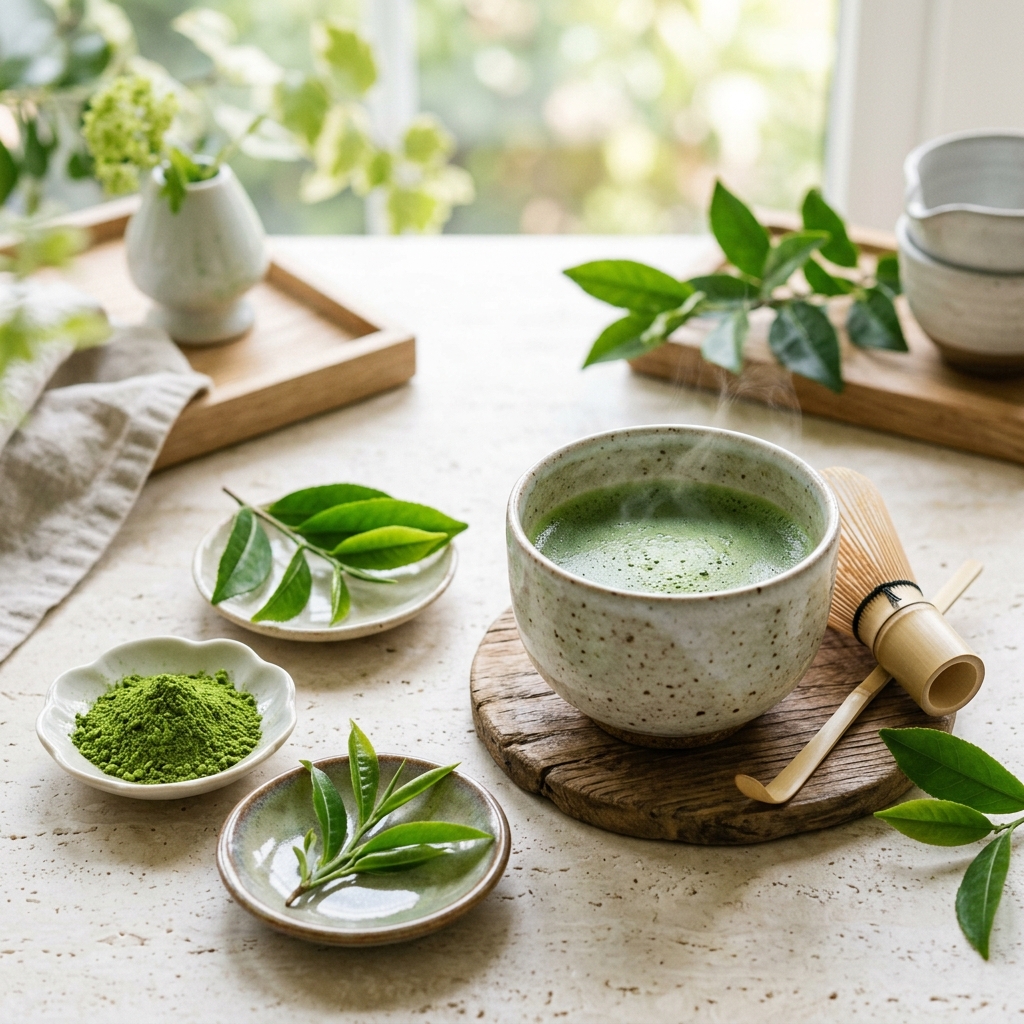
Japanese green tea is a powerhouse of bio-active functional compounds.
Catechins (Polyphenols)
- EGCG (Epigallocatechin Gallate)~50% [Primary Fat-Burner]
- EGC (Epigallocatechin)
- EC (Epicatechin)
- ECG (Epicatechin Gallate)
Functional Compounds Overview
Catechins (Antioxidant Polyphenols): Dominated by EGCG (≈50% of total catechins), alongside EGC, EC, and ECG. These powerful antioxidants combat cellular aging, suppress oral pathogens (bad breath/cavities), eradicate Helicobacter pylori, accelerate lipid (fat) oxidation, and regulate blood glucose and arterial cholesterol. Concentration is highest in Sencha and Gyokuro, but drops in Hojicha due to thermal degradation.
Caffeine: Stimulates central nervous system cognition, memory, and metabolic fat breakdown. When bound naturally to L-Theanine, it provides sustained, calm alertness without jittery crashes. Caffeine hierarchy: Gyokuro > Matcha > Sencha > Bancha > Genmaicha > Hojicha.
L-Theanine (Amino Acid): Generates brain alpha waves to induce deep relaxation while maintaining focus. Directly dampens sympathetic stress responses and improves sleep architecture. Sunlight converts L-Theanine into catechins; therefore, heavily shaded teas (Gyokuro/Matcha) possess the highest concentration of this calming compound.
Essential Vitamins & Minerals: Packed with Vitamin C (skin health/immunity), Vitamin E (anti-aging/circulation), and Vitamin B complex. Contains Potassium (blood pressure stabilization), Magnesium (neuromuscular health), and natural Fluoride (enamel fortification). To protect heat-sensitive Vitamin C, steep loose-leaf green teas at 70°C–80°C.