
May 2026
Masterclass: The Science & Standards of Matcha
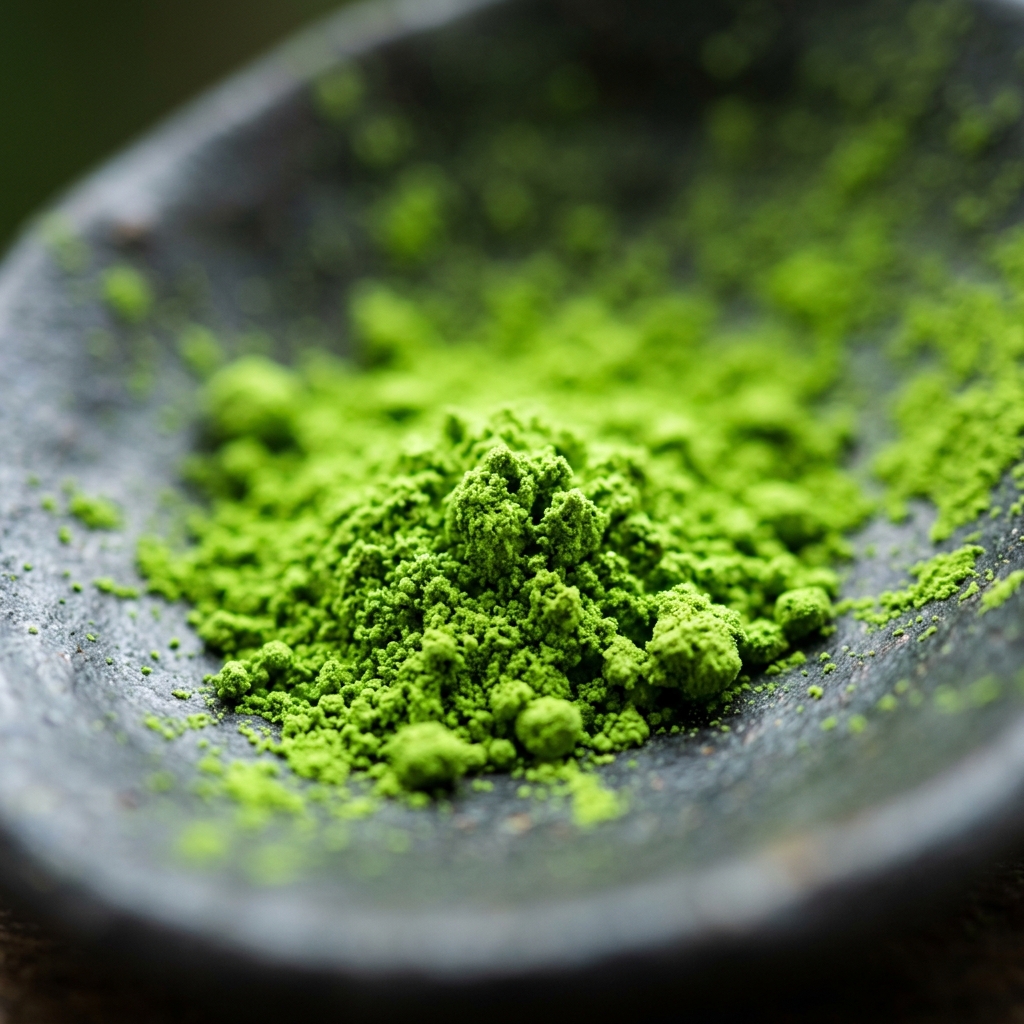
Matcha is strictly defined as: "A powdered green tea made by grinding dried tea leaves (Tencha) that were grown under shade and not rolled, using a stone mill until finely powdered".
The Tencha Refining Process
Unlike Sencha, Tencha leaves are never rolled. After harvesting and steaming, the foliage is dried flat into Tencha Aracha. To eliminate harsh structural bitterness, these rough leaves pass through air-current sorters and mechanical sieves to strip away fibrous stems and rigid leaf veins (collectively termed Demono). The remaining pure, delicate leaf flesh is designated as Shitate Tencha (refined tencha). Grinding this refined flesh yields matcha.
Physical Properties & Fragility
Matcha is milled to an ultra-fine particle size of 5 to 10 microns. Due to this massive surface-area-to-volume ratio, matcha is highly unstable:
- It absorbs ambient moisture and external odors almost instantly.
- UV radiation and light exposure degrade internal chlorophyll, causing rapid color fading.
To prevent premature oxidation, elite distributors store unground Shitate Tencha in refrigerated, dehumidified vaults, executing stone-milling strictly on demand. Controlled cold-aging allows amino acids to mature, unlocking a sweet sensory bouquet known as Ooika (覆い香 or "over-the-top fragrance").